
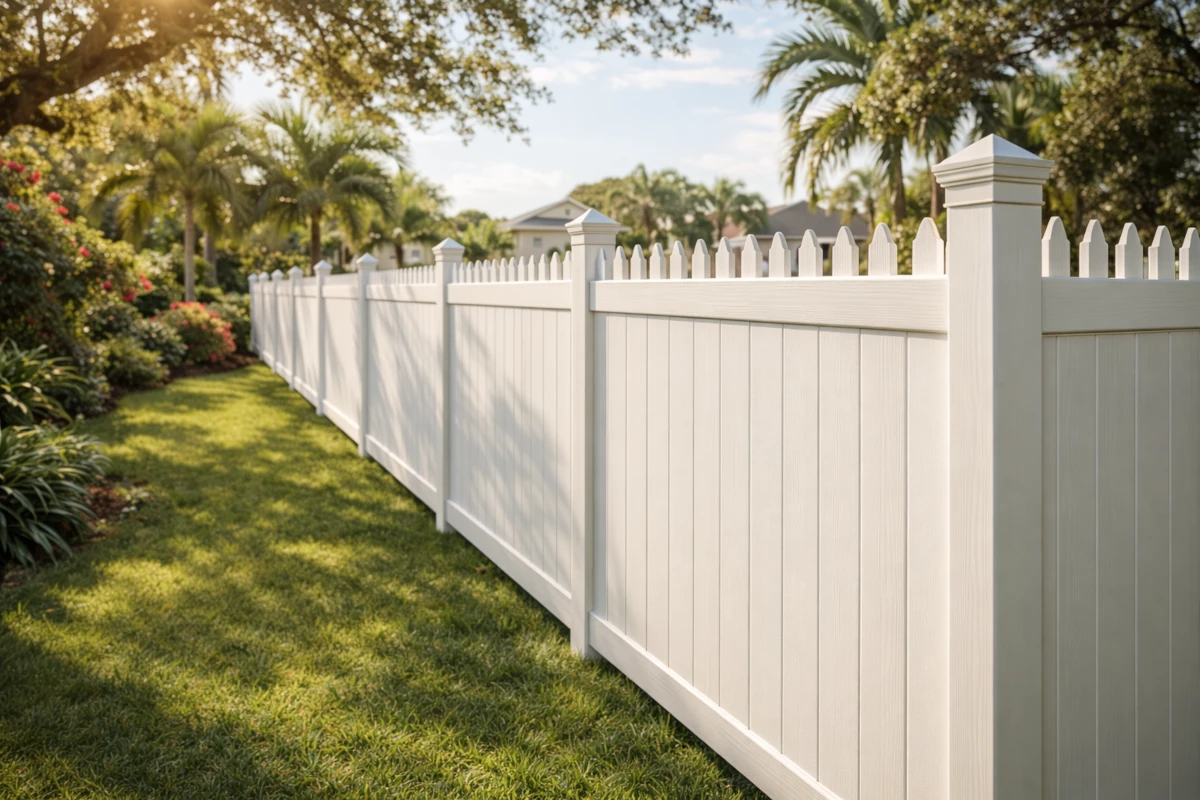
Maintaining a vinyl fence in Charlotte County requires regular washing with mild soap and water, avoiding harsh chemicals and high-pressure settings that can damage the material. Charlotte County’s subtropical climate, with high humidity and occasional storms, makes quarterly cleaning essential to prevent mold, mildew, and algae buildup. Use pH-neutral cleaners, soft brushes or cloths, and low-pressure water to preserve your fence’s appearance and extend its lifespan to 20-30 years or more.
Your vinyl fence is more than just a boundary marker. It defines your property, enhances curb appeal, and provides the privacy and security your family deserves. In Charlotte County, where intense sunshine, high humidity, and seasonal storms are part of everyday life, keeping your vinyl fence in pristine condition is both simple and essential.
Unlike wood fencing that demands constant staining and painting, vinyl fencing offers remarkable durability with minimal upkeep. But that doesn’t mean you can ignore it completely. Regular cleaning and proper maintenance will ensure your fence continues to look beautiful while standing strong against Charlotte County’s demanding climate for decades to come.
Why Vinyl Fencing Thrives in Charlotte County
Vinyl fencing has become increasingly popular among Charlotte County homeowners, and for good reason. The material’s inherent properties make it ideally suited to handle the unique environmental challenges our region presents.
Charlotte County experiences a subtropical climate characterized by hot, humid summers and mild winters. Our area receives substantial rainfall, particularly during summer thunderstorm season, and faces the occasional threat of tropical weather systems. These conditions would quickly deteriorate traditional wood fencing, but vinyl fencing stands resilient.
Vinyl does not rot, warp, or rust. It resists the humidity that permeates our coastal air and withstands the intense UV radiation from our year-round sunshine without fading or becoming brittle. Termites and other wood-boring pests that plague Charlotte County properties pose no threat to vinyl materials. This resistance to biological decay means your vinyl fence maintains its structural integrity without the constant vigilance required by organic fencing materials.
The low-maintenance nature of vinyl fencing is particularly valuable in Charlotte County, where homeowners already juggle lawn care demands intensified by our extended growing season. A quick wash a few times per year keeps your vinyl fence looking fresh, freeing up your weekends for enjoying the area’s beaches, golf courses, and waterways rather than endless fence maintenance.
Essential Cleaning Supplies for Your Vinyl Fence
Before you begin cleaning your vinyl fence, gather the right supplies. Using appropriate materials protects your fence from damage while ensuring effective cleaning results.
Start with a bucket, garden hose with an adjustable nozzle, and soft-bristle brushes or non-abrasive sponges. Microfiber cloths work exceptionally well for spot cleaning and final touches. For your cleaning solution, mild dish soap mixed with warm water provides gentle yet effective cleaning power for routine maintenance.
For tougher stains caused by mold, mildew, or algae (common in Charlotte County’s humid environment), consider a specialized vinyl fence cleaner or create a solution using one part white vinegar to three parts water. Some homeowners achieve excellent results with oxygen bleach products designed specifically for vinyl surfaces.
What you should avoid is equally important. Skip abrasive scrubbing pads, steel wool, and harsh scouring materials that scratch vinyl’s smooth surface. These scratches create tiny grooves where dirt accumulates, making future cleaning more difficult and giving your fence a permanently dull appearance.
Harsh chemicals pose another serious risk. Avoid chlorine bleach, acetone, paint thinner, and other aggressive solvents. These chemicals can discolor vinyl, cause brittleness, and compromise the material’s structural integrity. The same applies to cleaners containing ammonia, which can react with vinyl and cause yellowing or surface degradation over time.
Step-by-Step Vinyl Fence Cleaning Process
Cleaning your vinyl fence properly ensures outstanding results without causing damage. Follow this proven process for best outcomes.
Begin by removing loose debris. Walk along your fence line and clear away leaves, grass clippings, spider webs, and other accumulated material. Pay special attention to the base of the fence where debris tends to collect, particularly after Charlotte County’s summer storms or during our windy season.
Next, rinse the entire fence with your garden hose using a gentle spray setting. This initial rinse removes surface dirt and dust, making the subsequent cleaning more effective. Work from top to bottom to prevent dirty water from running down onto already-cleaned sections.
Prepare your cleaning solution in a bucket. For routine maintenance, mix a few tablespoons of mild dish soap into a gallon of warm water. For more stubborn stains or areas with visible mold growth, use a vinyl-specific cleaner or your vinegar solution.
Apply the cleaning solution to one section of fence at a time, working in manageable areas of roughly 4-6 feet. Use your soft-bristle brush or sponge to gently scrub the vinyl surface, paying extra attention to textured areas where dirt can hide. For Charlotte County fences, focus particularly on north-facing sections and shaded areas where moisture lingers and mold is more likely to develop.
Allow the cleaning solution to sit for a few minutes on stubborn stains, giving it time to break down the grime. Avoid letting the solution dry on the surface, as this can leave residue.
Rinse thoroughly with clean water, again working from top to bottom. Ensure all soap residue is completely removed, as leftover cleaner can attract dirt and create a sticky film that diminishes your fence’s appearance.
For exceptionally dirty fences or annual deep cleaning, you may use a pressure washer, but exercise extreme caution. Set the pressure washer to its lowest effective setting (typically 1,300-1,600 PSI) and maintain a distance of at least 12-18 inches from the vinyl surface. Hold the nozzle at an angle rather than directing it straight at the fence. High pressure or close proximity can strip vinyl’s protective surface layer, creating a rough texture that attracts and holds dirt.
Addressing Common Charlotte County Fence Challenges
Charlotte County’s environment presents specific challenges that require targeted solutions.
Mold and Mildew Removal
Our humid climate creates perfect conditions for mold and mildew growth, particularly in shaded areas with limited air circulation. Dark streaks or green patches on your vinyl fence indicate mold or mildew presence.
Address this issue promptly with a solution of one part white vinegar to three parts water, or use an oxygen bleach product formulated for vinyl surfaces. Apply the solution, allow it to penetrate for 10-15 minutes, then scrub gently with a soft brush. Rinse thoroughly. For persistent mold, repeat the process or consider a commercial mold and mildew remover designed for vinyl fencing.
Prevention helps minimize future mold growth. Trim vegetation growing near your fence to improve air circulation. Remove fallen leaves and organic debris that trap moisture against the vinyl surface.
Algae and Green Staining
The combination of moisture, warmth, and sunlight that characterizes Charlotte County creates ideal conditions for algae growth. Green staining typically appears on fence sections that receive morning dew but limited direct sunlight.
Remove algae using the same vinegar solution effective against mold. For heavier algae buildup, a soft brush dipped in the cleaning solution works well. Some homeowners successfully use products containing sodium hypochlorite at low concentrations, but always test these in an inconspicuous area first to ensure they don’t cause discoloration.
Hard Water Stains
Charlotte County’s water supply can leave mineral deposits on vinyl fences, particularly visible after rain or irrigation spray. These white, chalky deposits mar your fence’s appearance but respond well to treatment.
Remove hard water stains with a solution of equal parts white vinegar and water. Apply with a soft cloth, let sit briefly, then wipe clean. For stubborn mineral deposits, consider a commercial calcium and lime remover formulated for vinyl surfaces.
Storm Debris and Wind-Blown Grime
Charlotte County experiences strong thunderstorms throughout summer and occasional tropical weather. After significant weather events, debris and grime can coat your fence.
Inspect your fence after major storms for damage and clean away accumulated debris promptly. A thorough rinse followed by gentle scrubbing with soapy water typically restores your fence’s appearance. Check fence posts and panels for any structural issues that may require professional attention.
Seasonal Maintenance Schedule for Charlotte County
Establishing a regular maintenance schedule keeps your vinyl fence looking its best year-round while preventing minor issues from becoming major problems.
Spring Maintenance
Charlotte County’s spring brings increased pollen, particularly from our abundant oak trees and native vegetation. Schedule a thorough fence cleaning in late April or early May after the primary pollen season ends.
Inspect fence panels, posts, and gates for any winter weather damage. Check that all hardware remains secure. Trim back vegetation that grew during winter and early spring, ensuring adequate clearance between plants and your fence.
Summer Maintenance
Summer humidity and frequent afternoon thunderstorms can accelerate mold and mildew growth. Plan a mid-summer cleaning in July or August, focusing particularly on shaded fence sections.
Monitor for signs of algae development and address growth promptly before it spreads. After major storms, inspect for debris accumulation and damage.
Fall Maintenance
As temperatures moderate in Charlotte County’s fall season, complete another thorough cleaning. This is an excellent time to address any maintenance issues before the holiday season.
Clear fallen leaves and organic debris from fence bases. Check for any sections showing wear or damage that should be repaired before winter.
Winter Maintenance
While Charlotte County winters are mild, occasional cold fronts and winter storms occur. Perform a light cleaning and inspection in January or February.
This is ideal timing for repairs, as contractors’ schedules are often more flexible during winter months. Address any issues discovered during your inspection before spring arrives.
Protecting Your Investment
Proper maintenance protects your substantial investment in vinyl fencing. Charlotte County homeowners typically invest several thousand dollars in quality vinyl fence installation, making care and maintenance a wise financial decision.
A well-maintained vinyl fence can last 20-30 years or more, far exceeding the lifespan of wood fencing in our climate. Regular cleaning preserves the fence’s appearance, maintaining your property’s curb appeal and resale value.
Beyond cleaning, take these additional protective measures. Avoid placing lawn equipment, ladders, or heavy objects against your fence, as excessive weight or impact can cause panels to crack or warp. Keep irrigation systems adjusted so they don’t constantly spray your fence, as prolonged moisture exposure can promote organic growth.
When landscaping near your fence, leave adequate space between plants and vinyl panels. Dense vegetation restricts air circulation and creates moisture pockets where mold and mildew thrive. Maintain at least 6-12 inches of clearance between shrubs and your fence line.
Inspect gates regularly, as these high-use components experience more wear than fence panels. Ensure hinges remain properly lubricated and latches function smoothly. Tighten any loose hardware before minor issues become major problems requiring panel replacement.
When to Call Professionals
While vinyl fence maintenance is generally straightforward, certain situations warrant professional assistance. If you notice cracks, breaks, or structural damage to fence panels or posts, contact a qualified fence repair service. Charlotte County’s strong winds and occasional severe weather can cause damage beyond the scope of routine homeowner maintenance.
Similarly, if cleaning efforts fail to remove persistent stains or if your fence shows signs of fading or discoloration despite proper care, professional assessment may identify underlying issues. Some discoloration results from chemical reactions or UV damage that requires specialized treatment or panel replacement.
For homeowners who prefer professional service or lack the time for regular maintenance, several Charlotte County companies offer fence cleaning services. These professionals have commercial-grade equipment and specialized cleaning solutions that can restore heavily soiled fences or handle large properties efficiently.
The Bottom Line on Vinyl Fence Care
Maintaining your vinyl fence in Charlotte County doesn’t require extensive time or specialized skills. Simple, regular cleaning with appropriate materials keeps your fence looking beautiful while protecting your investment for decades.
Establish a seasonal cleaning routine, address problems promptly when they arise, and avoid harsh chemicals or aggressive cleaning methods that can damage vinyl’s protective surface. Your fence will reward this modest effort with years of maintenance-free beauty, enhanced property value, and the peace of mind that comes from knowing your home’s perimeter looks its absolute best.
Whether you’re protecting the pristine white vinyl fence bordering your Charlotte County home or maintaining the attractive tan privacy fence surrounding your pool area, these proven maintenance techniques ensure lasting results. Take action today to protect tomorrow’s curb appeal.

